
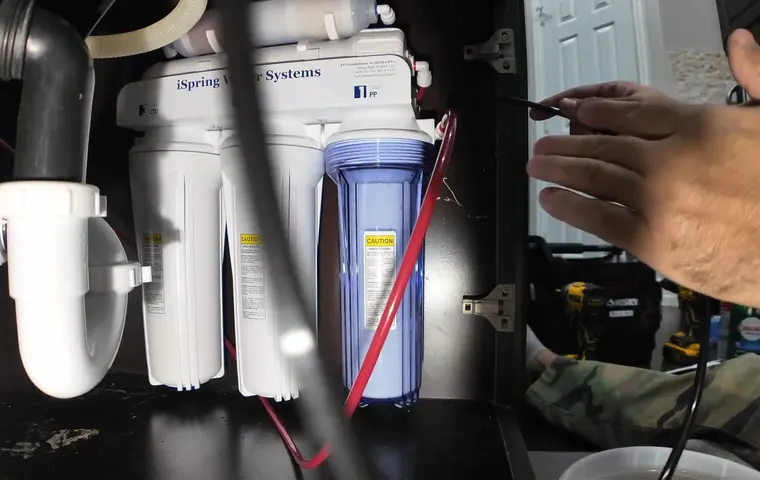
Tolleson's Water Supply: What You're Starting With
Tolleson draws approximately 88 percent of its drinking water from City of Phoenix purchased connections, with the remaining 12 percent from two locally treated groundwater wells using electro-dialysis reversal (EDR). Both sources meet Safe Drinking Water Act standards and are tested regularly. Both also deliver water running 16 to 19 grains per gallon of mineral hardness, along with the taste and odor characteristics associated with chlorine disinfection in treated municipal water. Under-sink reverse osmosis systems and whole-home filtration address these characteristics at the point of use, providing filtered water for drinking and cooking without altering the whole-home supply.
What Reverse Osmosis Removes
A reverse osmosis system forces water through a semi-permeable membrane that removes dissolved solids by size exclusion. The RO membrane removes calcium and magnesium hardness minerals, sodium (important if a water softener is installed upstream), chlorine and chloramine from municipal disinfection, lead, nitrates, and many other dissolved compounds. The result at the filtered tap is water with total dissolved solids (TDS) well below 50 mg/L, compared to Tolleson's supply water that may run 400 mg/L or more depending on the source blend at any given time.
Under-sink RO systems are installed at a single kitchen or wet-bar tap and provide filtered water for drinking and cooking. They do not filter the whole-home supply. A dedicated filter line feeds a separate small faucet at the sink, and a storage tank holds a supply of treated water to deliver adequate flow rates on demand.
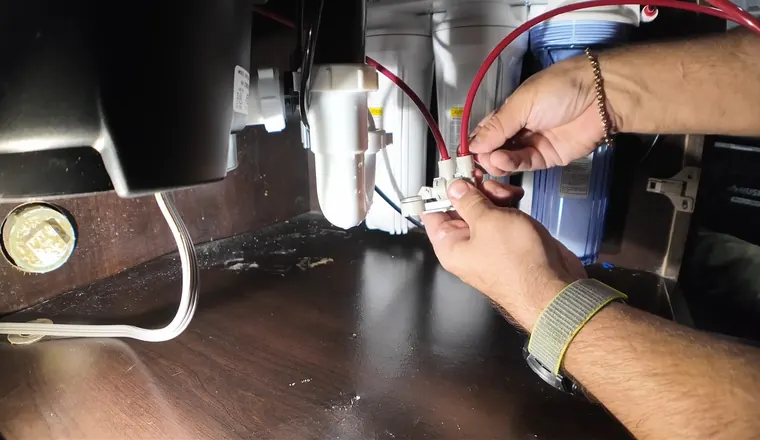
Under-sink RO systems treat drinking water separately from whole-home hardness control. It fits the Water Filtration and Reverse Osmosis in Tolleson, AZ section. The repair area is visible from a closer angle.
Whole-Home Filtration
Whole-home filtration systems treat the full supply entering the house, typically using carbon block filters that reduce chlorine and chloramine and improve taste and odor without removing hardness minerals. Whole-home filters are commonly used in combination with a water softener: the softener removes hardness minerals from the whole-home supply, and the carbon filter addresses the chlorine taste and odor from municipal disinfection. This combination handles both scale protection and general taste improvement at the whole-home level, though it does not produce water as pure as a point-of-use RO system at the drinking tap.
RO vs. Water Softener: Complementary, Not Competing
A water softener protects the entire home plumbing system and all appliances from scale. It adds a small amount of sodium to the treated water and does not address chlorine taste and odor.
A reverse osmosis system produces extremely pure water at a single tap. It does not protect the whole-home supply system from scale and is not designed for whole-home flow rates.
For Tolleson homeowners whose goals include both scale protection for plumbing and high-quality drinking water, a water softener on the whole-home supply paired with an under-sink RO system at the kitchen tap is the most complete approach. Each system does what the other does not.
Installation and Maintenance
Under-sink RO system installation connects to the cold-water supply under the sink, a drain connection for reject water (the concentrated water the membrane passes to drain), and a dedicated small faucet at the sink. Most under-sink installations take two to three hours. Whole-home filtration installation connects to the main supply line inside the home, upstream of the water heater and all fixtures, similar to a water softener installation location.
RO membranes require replacement every 2 to 3 years in Tolleson's hard-water environment. Pre-filters need annual replacement. We provide filter replacement service and maintenance reminders.
Visible pipe connections help show the repair area clearly before the next step begins. It fits the Water Filtration and Reverse Osmosis in Tolleson, AZ section. At Tolleson's 16 to 19 grains per gallon, an RO membrane run without a softener upstream fouls years earlier than its rated life, which is why the two systems are usually specified together here.