If you have lived in Tolleson for any amount of time, you have probably noticed the white deposits on shower fixtures, the scale buildup around faucet spouts, and the spotting on glasses that comes out of the dishwasher. These are all symptoms of Tolleson's water hardness, which runs 16 to 19 grains per gallon at the tap. Understanding where that number comes from, and what it means for every pipe, fixture, and appliance in your home, is the starting point for managing the long-term costs that come with very hard water.
What Grains Per Gallon Actually Measures
Water hardness quantifies the concentration of dissolved calcium and magnesium in the water supply. Both minerals dissolve from rock formations as water moves through them and are harmless to drink. The problem is what they do to every surface the water contacts inside a home: they deposit as scale wherever evaporation or temperature change causes them to come out of solution.
One grain per gallon equals approximately 17.1 milligrams per liter of calcium carbonate. The U.S. Geological Survey classifies water as moderately hard at 3.5 to 7 gr/gal, hard at 7 to 10.5 gr/gal, and very hard above 10.5 gr/gal. The national average runs approximately 7 to 10 gr/gal. Tolleson's supply at 16 to 19 gr/gal falls in the very hard category, at roughly double the national average.
Where Tolleson's Water Comes From
The City of Tolleson draws approximately 88 percent of its drinking water from City of Phoenix purchased connections. Phoenix sources from the Salt River Project (SRP) and the Central Arizona Project (CAP), which deliver water from the Salt and Gila river watersheds and the Colorado River respectively. The remaining 12 percent comes from two Tolleson-operated groundwater wells treated by electro-dialysis reversal (EDR), a process that reduces total dissolved solids but is not the same as a water softening process.
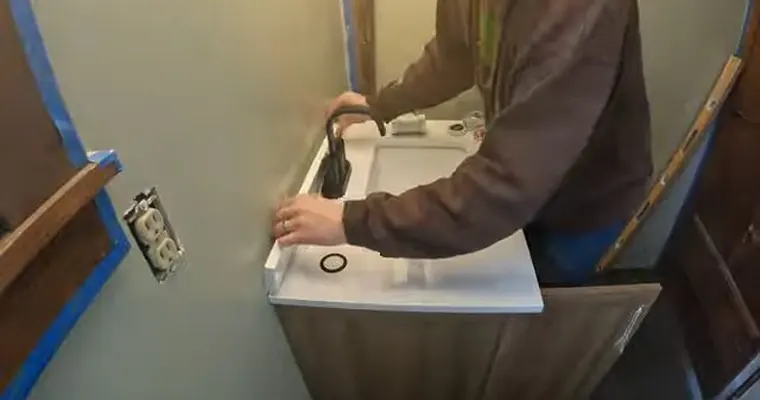
Faucet and drain work depends on tight connections around the valve, trap, and supply lines. It fits the Why Tolleson Water Runs 16 to 19 Grains Per Gallon section.
Why the Water Is So Hard
The Salt and Colorado river systems flow through limestone, gypsum, and dolomite rock formations as they move downstream through the Southwest. These formations dissolve calcium and magnesium into the water, and that mineral load travels through the delivery system to Tolleson's taps. The local groundwater in Tolleson's aquifer passes through similar calcite-rich geology, which is why EDR treatment at the wellheads does not fully reduce the hardness: EDR lowers total dissolved solids, but calcium and magnesium remain elevated in the treated output.
What 16 to 19 Grains Per Gallon Does in Your Home
At Tolleson's hardness level, scale accumulates on every surface that water contacts inside the home. The practical effects compound over time.
- Water heater tanks: scale deposits on heating elements and tank walls reduce thermal efficiency and shorten service life to 6 to 8 years rather than the 11-plus years typical in soft-water markets
- Supply lines: calcium and magnesium deposits narrow the effective pipe interior diameter year over year, gradually reducing flow and pressure throughout the house
- Drain pipes: scale on interior pipe walls creates a rough surface that grease, hair, and soap residue adhere to, making drain blockages more frequent and harder to clear
- Fixtures, aerators, and showerheads: aerator screens block and showerhead nozzles close off on compressed timelines compared to soft-water cities, requiring cleaning or replacement every 6 to 12 months
- Appliances: dishwashers, ice makers, coffee makers, and washing machines accumulate scale on heating elements and water-contact surfaces, shortening service life and reducing efficiency
The effects are cumulative and simultaneous. A home with Tolleson's water hardness and no treatment sees the accelerated timeline across every system at once.
The Practical Response
The most effective approach is a whole-home water softener installed on the main supply line. A properly sized ion-exchange softener removes calcium and magnesium from the water before it reaches any pipe, fixture, or appliance, stopping new scale formation throughout the home. For drinking water quality specifically, pairing a softener with an under-sink reverse osmosis system at the kitchen tap removes the sodium the softener introduces and produces water close to pure at that fixture.
For homeowners not ready for a softener, the minimum protective steps are: flushing the water heater tank annually to remove accumulated sediment, cleaning or replacing aerators every six to twelve months, and scheduling periodic drain cleaning to manage scale buildup in drain lines before it creates blockages.
Further Reading
For more on addressing Tolleson's hard water, our Water Softener Installation page covers sizing and the installation process in detail. Our Water Filtration and Reverse Osmosis page covers under-sink RO and whole-home carbon filtration options. Hard water's specific effect on tank and tankless water heaters is covered on our Water Heater Repair and Replacement page. For the role of hard water in recurring drain blockages, see our Drain Cleaning page.