Tolleson sits in one of the oldest continuously irrigated agricultural districts in Arizona. Long before the warehouses and distribution centers that define the city today, the land around what is now Tolleson was laid out in farm fields fed by canals from the Salt River, one of the Southwest's primary irrigation water sources. The water that reaches Tolleson taps today comes from a different delivery mechanism than those original canals, but it passes through the same regional geology that gives Arizona's water its characteristic mineral content. Understanding where Tolleson's water comes from, how it is treated, and why it arrives at 16 to 19 grains per gallon explains the plumbing maintenance reality for every homeowner and facility manager in the city.
The Salt River Project and Tolleson's Agricultural Origins
The Salt River Project (SRP) was established in 1903 as one of the first federal reclamation projects, and Roosevelt Dam, completed in 1911, created the first large reservoir on the Salt River. The dam made year-round water delivery to the Salt River Valley possible and opened the region to large-scale irrigated agriculture. When Walter G. and Alethea H. Tolleson purchased 160 acres at the corner of 91st Avenue and Van Buren Street in 1910, they were buying into an agricultural frontier made viable by this infrastructure. The town they founded was built on irrigation water from the Salt River, the same river system that, through a more complex delivery network, still supplies a significant portion of Tolleson's drinking water today.
Where Tolleson's Water Comes From Today
The City of Tolleson draws approximately 88 percent of its drinking water from City of Phoenix connections. Phoenix sources its water from two primary systems: the Salt River Project (surface water from the Salt and Verde rivers) and the Central Arizona Project (Colorado River water delivered through a 336-mile canal to the Phoenix metropolitan area). The remaining 12 percent of Tolleson's supply comes from two city-operated groundwater wells treated by electro-dialysis reversal (EDR), a membrane process that reduces total dissolved solids in the groundwater before it enters the distribution system.
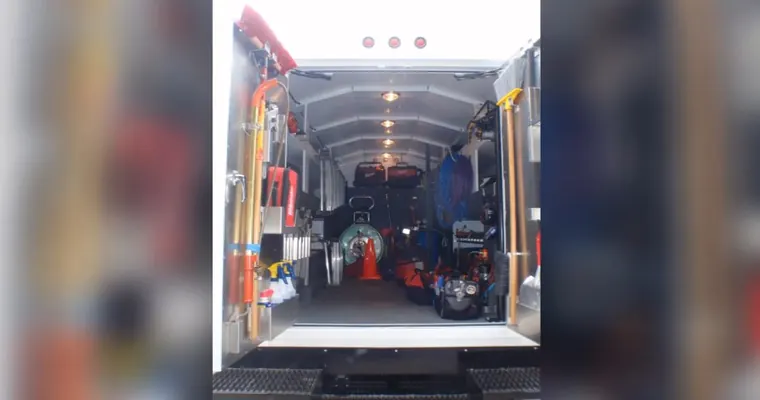
Emergency plumbing work focuses on stopping water damage first, then completing a permanent fix. It fits the Tolleson's Water Supply: From the Salt River Farms to Your Tap section.
What EDR Does and Does Not Do
Electro-dialysis reversal (EDR) uses an electrical current to move ions across selective membranes in the water, reducing the total concentration of dissolved solids. Tolleson uses it at its two groundwater wells because the local aquifer produces water with higher dissolved solid content than the Phoenix-delivered surface water supply. EDR effectively reduces total dissolved solid levels, but it is not water softening in the ion-exchange sense. It does not selectively target calcium and magnesium (the hardness minerals) as efficiently as an ion-exchange softener does. The groundwater from Tolleson's wells, after EDR treatment, still contributes calcium and magnesium to the blended supply.
Why the Water Is Still Very Hard After Treatment
The surface water that arrives from Phoenix's treatment plants carries mineral content derived from the Salt, Verde, and Colorado river systems flowing through limestone and gypsum geology. The groundwater in Tolleson's local aquifer passes through similar calcite-rich formations before reaching the wells. Both sources deliver water with significant dissolved calcium and magnesium content. Municipal water treatment addresses safety parameters: pH adjustment, disinfection, filtration for turbidity, and testing for regulated contaminants. None of these safety treatments remove calcium or magnesium. The result is water that meets all Safe Drinking Water Act requirements and still delivers 16 to 19 grains per gallon of mineral hardness to every pipe, fixture, and appliance in the city.
The Practical Takeaway for Tolleson Homeowners
The City of Tolleson provides safe, treated drinking water that meets federal standards. The hardness in that water is a characteristic of the regional geology and the source water that city treatment does not address, because addressing it is a consumer choice, not a public health obligation. Homeowners who want to stop the ongoing scale accumulation in their plumbing and appliances address it at the property level, through a whole-home water softener. Homeowners who want higher purity at the drinking tap add an under-sink reverse osmosis system. Both are investments in property protection and comfort rather than responses to any safety deficiency in the municipal supply.
Further Reading
For information on addressing Tolleson's 16-to-19-grain-per-gallon hard water at your home, our Water Softener Installation page covers the ion-exchange process and what a whole-home softener does for Tolleson's specific hardness level. Our Water Filtration and Reverse Osmosis page covers under-sink RO systems and whole-home carbon filtration options for homeowners who also want to address taste and odor characteristics at the drinking tap.