Tolleson is a city of 7,200 residents that employs more than 20,000 people within its 5.7 square miles. It is one of the oldest West Valley cities, founded on a 160-acre ranch in 1910 and incorporated in 1929, and it hosts some of the largest distribution and logistics operations in the Southwest. It has a historic residential core built from the 1920s through the 1960s where some homes still carry the original galvanized supply lines, and it has million-square-foot warehouse facilities for Fortune 500 companies operating in close proximity to those same residential streets. These two realities, side by side in five and a half square miles, create a plumbing market unlike any other city we serve.
The 1910 Ranch and Tolleson's Founding
Walter G. Tolleson (born May 17, 1860) and his wife Alethea H. Tolleson purchased 160 acres at the corner of 91st Avenue and Van Buren Street in 1910 for $16,000. Walter established a grocery store, had the land surveyed, and laid out the town lots that would become the original Tolleson townsite. The city was formally incorporated in 1929. Van Buren Street, which ran directly through the townsite, was at that time part of US Route 80, one of the first transcontinental highways in the United States and nicknamed the Broadway of America. The community that grew along Route 80 was built for agriculture and commerce at the crossroads of a major national highway.
The Vegetable Center of the World
Through the 1940s and 1950s, Tolleson earned the informal title of Vegetable Center of the World for its role in Arizona's produce industry. The irrigated fields surrounding the city produced melons, lettuce, cotton, and other crops. The concentration of packing sheds, cooling operations, and agricultural supply businesses along Van Buren Street defined the economic identity of the town. The homes built in Original Tolleson during this period, modest construction designed for the families of farm workers and small business owners, still stand south of Van Buren Street today. Many carry the plumbing systems that were installed when they were built: galvanized supply lines, cast-iron drain stacks, and sewer laterals in clay tile or early cast iron.
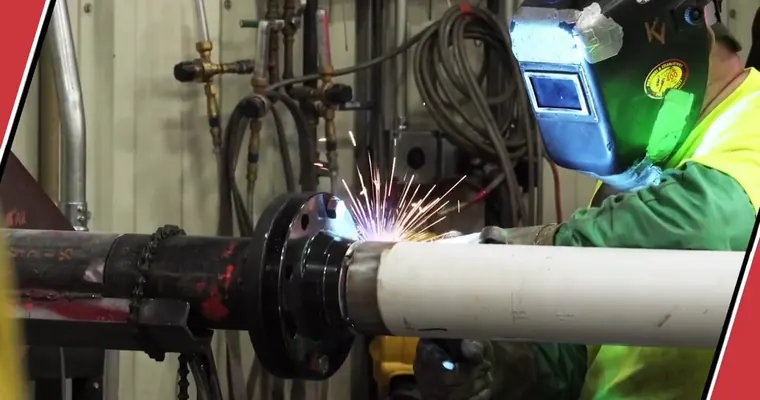
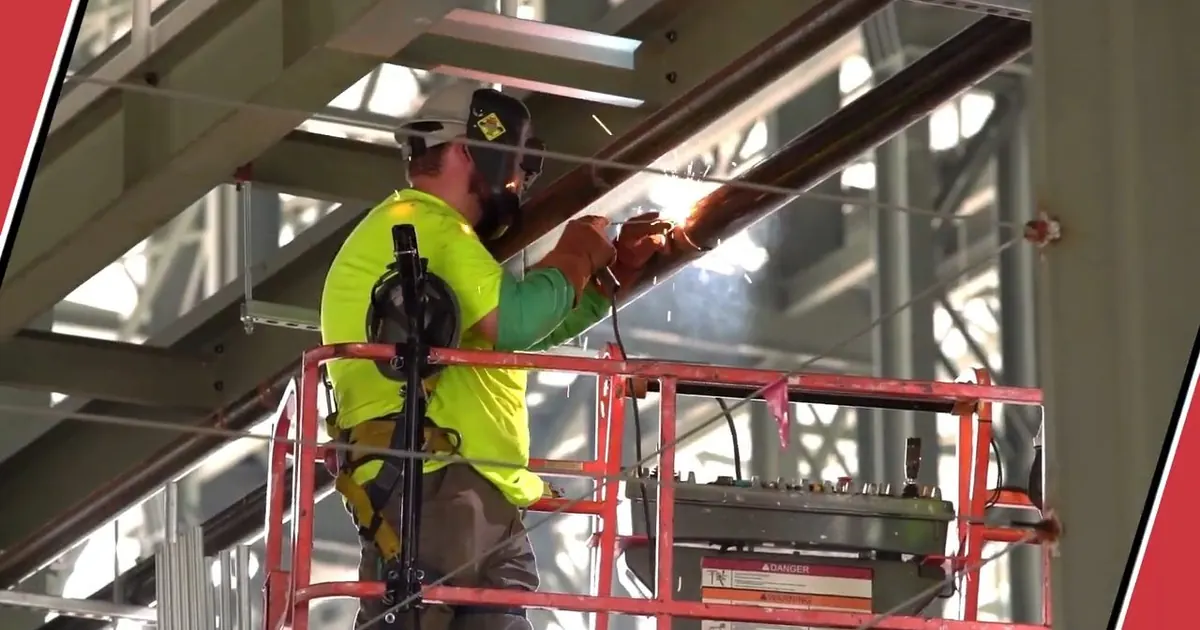
Large-diameter commercial piping needs clean joints and accessible service points. It fits the From the Vegetable Center of the World to Fortune 500 Hub:... section.
The 1980s Transformation
The agricultural era in Tolleson gave way to an industrial one through the 1970s and 1980s, accelerated by several large-scale facility announcements. Albertson's distribution center and Fry's Food and Drug distribution operations established large-scale warehousing in Tolleson's industrial corridor, attracted by the city's position at the intersection of Interstate 10, State Route 85, and the Union Pacific Railroad main line, all within approximately one mile of the Van Buren and 67th Avenue corridor. These operations brought a new scale of employer to a small city and established the pattern that would define Tolleson's economy into the 21st century: major regional distribution hubs using the city's logistics access position in the West Valley metropolitan area.
Today: 20,000 Workers in a 7,200-Person City
Today, the Tolleson Industrial District and surrounding commercial properties host more than 20 Fortune 500 companies and bring more than 20,000 workers to the city on a daily basis. These include food distribution, cold-storage, consumer goods logistics, and advanced manufacturing operations that collectively generate economic activity well out of proportion to the city's residential population. Tolleson is hemmed in on all sides by Phoenix annexation and cannot expand beyond its current 5.7 square miles, which means the industrial density that has developed is essentially permanent rather than a transitional stage of growth. The city that Walter and Alethea Tolleson platted from a 160-acre ranch is today one of the most economically active square-mile-for-square-mile communities in the Phoenix metropolitan area.
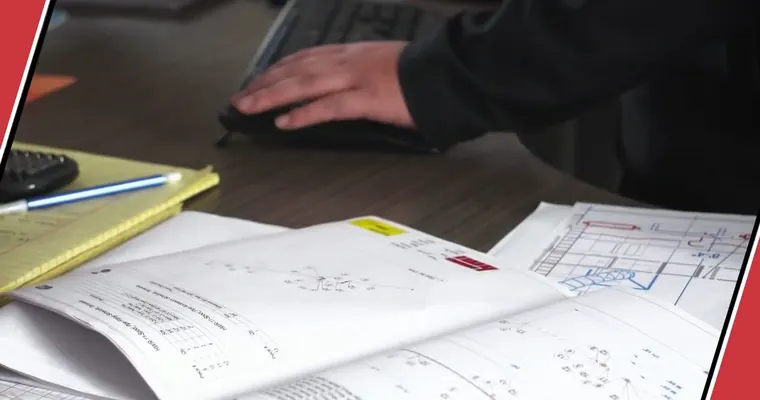
Plans help coordinate rough-in, drain routing, and fixture locations before work starts. It fits the From the Vegetable Center of the World to Fortune 500 Hub:... section.
The Plumbing Reality of Two Markets in One City
The residential population of Tolleson is over 80 percent Hispanic and Latino, with deep community roots in the Original Tolleson neighborhood built during the agricultural era. The homes in that neighborhood, built between the 1920s and the 1960s on adobe-block and wood-frame foundations, present the plumbing challenges that come with age: galvanized supply lines at or past end of service life, cast-iron drain stacks with decades of hard-water scale at 16 to 19 grains per gallon, and sewer laterals in aging materials that have rarely if ever been inspected. Caliche hardpan at 2 to 4 feet adds slab leak risk and makes excavation-based repair more expensive when needed.
A quarter mile from Original Tolleson's residential streets, the industrial corridor requires a completely different plumbing expertise: annual backflow preventer certification filed with the City of Tolleson Water Utilities, grease interceptor maintenance on production-volume-calibrated schedules, large-diameter commercial sewer lateral inspection and maintenance, and commercial permit coordination for tenant improvement and equipment modification projects. A food distribution operation running around the clock has plumbing compliance obligations that bear no resemblance to what the family three blocks away in Original Tolleson needs for their 1950s-era home.
Serving both markets requires genuine fluency in both disciplines. It is the specific challenge of Tolleson, and it is the reason our service for this city carries the commercial-first positioning that no other site in our 25-city portfolio uses. One licensed number, two very different markets, one city of 5.7 square miles that punches above its weight in both directions simultaneously.
Further Reading
Our Commercial Plumbing page covers the full scope of commercial plumbing service for the Tolleson Industrial District and Van Buren corridor, including backflow compliance, grease interceptor maintenance, and commercial permit coordination. Our Repiping page covers whole-home PEX-A repipe for Original Tolleson's pre-1970 housing stock. Our Water Softener Installation page covers the hard-water treatment strategy appropriate for the 16-to-19-grain-per-gallon supply that reaches every Tolleson property, residential and commercial alike.