Setting the right grease trap cleaning schedule for a Tolleson restaurant is not a guessing exercise. It is a measurement. The standard threshold used throughout the food-service industry is to service the grease interceptor before it reaches 25 percent of its total capacity with grease and solids. Most enforcement authorities, including the City of Tolleson's pretreatment program, use some version of this threshold when evaluating whether a facility's maintenance schedule is adequate. Understanding what drives how fast your interceptor fills, how to measure it, and what happens when grease breaks through, is the foundation of a defensible maintenance program.
The 25 Percent Rule: What It Means in Practice
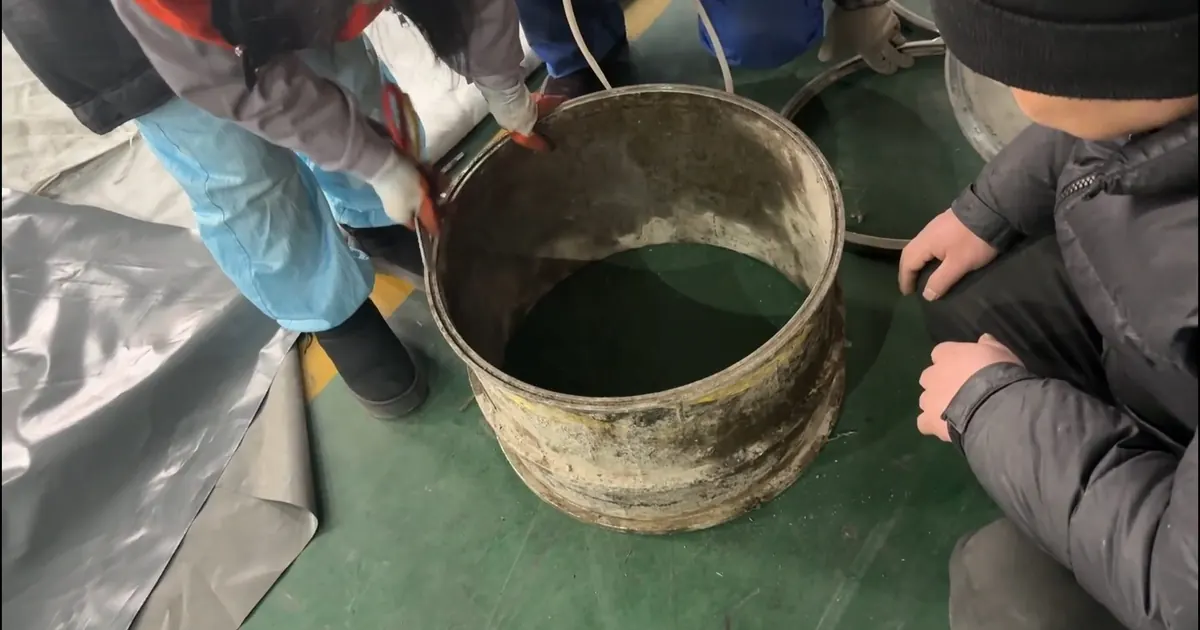
When a grease interceptor reaches 25 percent of its capacity with accumulated grease and settled solids, the clearance between the floating grease layer at the top and the settled solids layer at the bottom has been reduced to the point where incoming wastewater pushes through the grease rather than separating cleanly from it. At that point, grease begins breaking through to the drain lines and, eventually, to the city sewer system.
The 25 percent threshold is a maximum, not a target. Scheduling service when the interceptor is at 20 to 22 percent provides a buffer against a busier-than-expected service period or a scheduling delay. A restaurant that typically needs monthly service and lets a month-and-a-half pass without a visit may find the interceptor at or past its functional capacity during a busy weekend service.
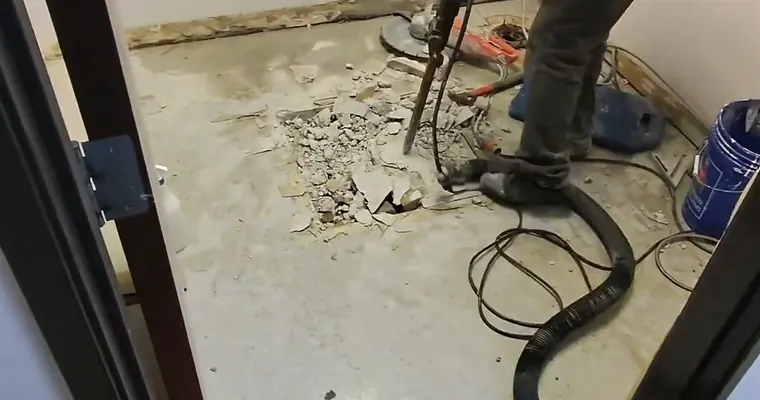
Cable and inspection tools help clear buildup and confirm the line is open. It fits the Grease Trap Service Frequency for Tolleson Restaurants:... section.
Factors That Determine How Often Your Interceptor Fills
How quickly a Tolleson restaurant's grease interceptor fills depends on several facility-specific factors that vary significantly between kitchens.
- Kitchen production volume: a high-volume full-service restaurant on Van Buren Street generates more grease per day than a smaller counter-service operation. Higher daily volume means faster trap filling on an equivalent interceptor size.
- Type of food being prepared: high-fat cooking such as frying, grilling, and heavy sauce production generates more grease per meal than lighter preparation methods. A taqueria preparing meats and frying tortillas generates a different interceptor load than a sandwich counter operation.
- Interceptor capacity: an interceptor sized correctly for the kitchen's grease load fills more slowly and allows a longer service interval than one that is undersized. If the interceptor was sized for a previous, lower-volume concept and the operation has grown, the sizing may no longer be appropriate for the current production level.
- Operating hours: a kitchen running 14 to 16 hours per day fills its interceptor significantly faster than one operating 8 hours per day on the same production volume per hour.
Setting the Interval Based on Measurement
Because production volume varies so much between commercial kitchens, the only reliable way to set the right service interval is to measure actual trap loading over time rather than applying an industry average. At the first service visit, we measure the grease layer depth and the settled solids depth and calculate the percentage of total capacity consumed. At the following visit, we repeat the measurement. The elapsed time and the percentage increase between the two measurements provides a loading rate for your specific kitchen, which directly determines how frequently service is needed to stay below the 25 percent threshold with adequate margin.
For a high-volume restaurant in Tolleson, this measurement typically shows that service is needed every four to eight weeks. For smaller food-service operations, the interval may be two to three months. Using the measurement prevents both over-servicing, which adds unnecessary cost, and under-servicing, which creates compliance and operational risk.
What Happens When Grease Breaks Through
When grease breaks through the interceptor and enters the building's drain lines, it creates the conditions for a drain backup at kitchen floor drains and three-compartment sink connections during service hours. This is the most visible immediate consequence for the kitchen's operations. At the city sewer level, grease discharge from a commercial kitchen creates a pretreatment compliance issue under Tolleson's requirements, which protect the city's sewer system and the downstream regional wastewater infrastructure. A documented pattern of grease breakthrough can result in a compliance notice from the City of Tolleson, a required interceptor upgrade, or a fine.
Service Documentation and Compliance Records
Grease trap service records should be maintained at the facility. During health department inspections, a facility that can produce documentation showing consistent service visits on a measurement-based schedule is in a stronger compliance position than one relying on verbal explanations of its maintenance history. We provide a written service record at each visit including the measured grease and solids loading, inlet baffle and outlet tube condition, and any repair or maintenance performed. These records support both health department compliance and any audit under Tolleson's pretreatment program.
Further Reading
Our Grease Trap Cleaning and Repair page covers the inspection, loading measurement, baffle maintenance, and cleanout coordination we provide for Tolleson restaurants and food-service facilities. Our Kitchen Exhaust Drain Cleaning page covers keeping the exhaust drain line clear so that kitchen hood cleaning can be completed on schedule and thoroughly. Our Commercial Drain Cleaning page covers scheduled drain maintenance for commercial kitchens and food-service operations beyond the grease interceptor itself.