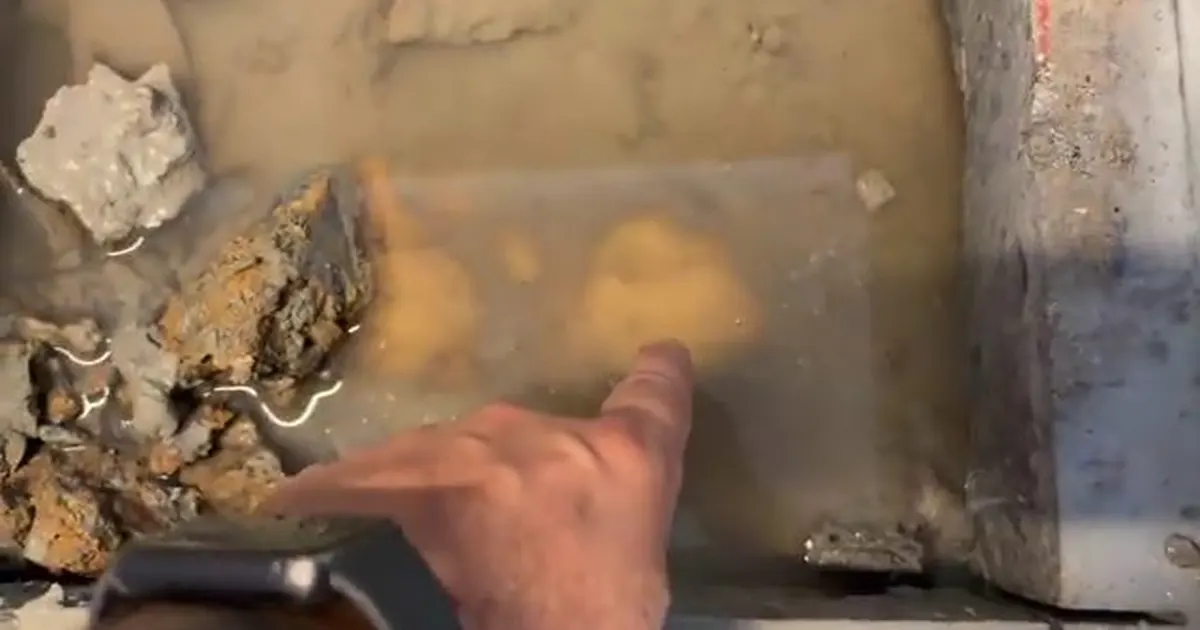
Slab leaks are among the most disruptive plumbing failures a Tolleson homeowner can face: a supply pipe failing beneath a concrete slab, leaking into the soil below the foundation and eventually appearing as warm floor spots, unexplained water bill spikes, or moisture at the base of walls. Tolleson has a higher rate of slab leaks than many comparable Arizona cities, and the reason comes down to two factors working simultaneously, one from outside the pipe and one from within it.
What Caliche Is
Caliche is a calcium carbonate hardpan, a naturally occurring cement-like layer that forms in semi-arid soils when calcium carbonate dissolved in groundwater precipitates at a specific soil depth. In the Sonoran Desert region, caliche typically forms 2 to 4 feet below the surface, ranging from a soft chalky layer to a rock-hard cemented mass that requires jackhammering to break through. Tolleson's soil profile includes silty-clay loam overlying caliche at this typical depth, which means nearly every residential slab in Original Tolleson sits above a caliche layer.
How Caliche Movement Stresses Buried Pipes
Caliche is not static. When Tolleson's soil absorbs monsoon rain during the summer rainy season, the caliche layer expands slightly as it takes on moisture. When conditions dry out in the weeks and months after the rains, the caliche contracts. This shrink-swell cycle repeats every year, applying lateral stress to whatever is embedded in or runs through the soil at that depth.
Water supply lines in slab-on-grade homes are typically run through or just below the concrete, at precisely the depth where caliche movement is most active. The repeated lateral pressure of the expansion-contraction cycle stresses copper pipe joints and gradually weakens the pipe wall at stress points. Over years, micro-fractures develop where the pipe has been repeatedly flexed.
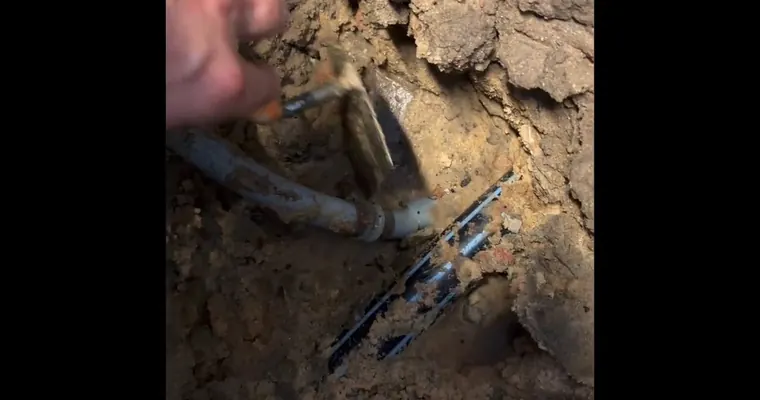
Opening a small area after locating the leak keeps slab repair focused and less disruptive. It fits the Caliche Soil and Hard Water: Why Slab Leaks Are More Common... section. The repair area is visible from a closer angle.
Hard Water Corrosion Working From the Inside
While caliche exerts pressure from outside, Tolleson's hard water at 16 to 19 grains per gallon is working on the pipe from within. Hard water is slightly acidic and carries dissolved minerals that react with copper pipe walls over time, thinning the interior surface through pitting corrosion. In hard-water environments, this interior corrosion progresses faster than in soft-water cities. A copper pipe that would remain structurally sound for 40 or 50 years in a soft-water market may develop significant wall thinning in 20 to 30 years in Tolleson's water chemistry conditions.
The Two Factors Together
A pipe stressed from the outside by soil movement and corroded from the inside by hard water is significantly more susceptible to failure than a pipe experiencing only one of those factors. This dual exposure is why Original Tolleson homes from the 1950s and 1960s, with under-slab copper installed 60 to 70 years ago, are in the age range where slab leaks are most likely to appear for the first time. The pipe has had decades of caliche movement weakening the joints and hard water thinning the walls. For many homeowners, the first slab leak is a surprise. The second, if the supply system is not evaluated, arrives faster.
Warning Signs of a Slab Leak
Most slab leaks do not announce themselves dramatically. The early signs are subtle and easy to dismiss until the leak has worsened. Watch for these indicators in a Tolleson home.
- An unexplained increase in the water bill without any change in household usage or season
- A warm or hot spot on the floor, particularly over tile or concrete in areas where supply lines run beneath the slab
- The sound of water running when every fixture in the house is off
- Cracks developing in the slab flooring near wall bases
- Persistent dampness or white mineral deposits at the base of interior walls
- A water meter that continues to advance with all fixtures shut off
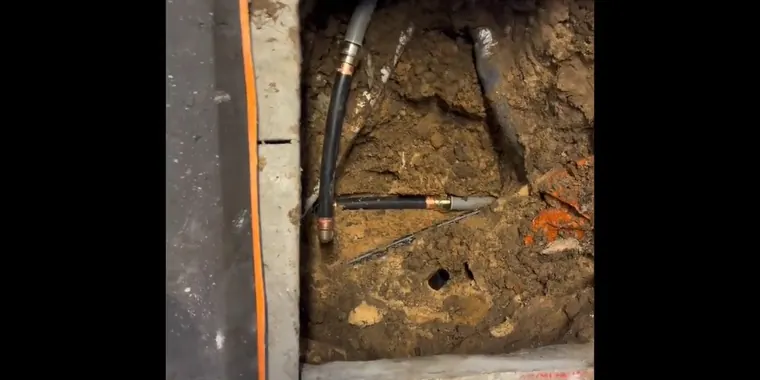
Opening a small area after locating the leak keeps slab repair focused and less disruptive. It fits the Caliche Soil and Hard Water: Why Slab Leaks Are More Common... section. The connection details are easier to see here.
What to Do When You Suspect a Slab Leak
If any of the warning signs above are present, the most important first step is calling for professional leak detection before doing anything else. The most common and costly mistake in slab leak response is guessing the location and opening concrete without a confirmed detection finding. Electronic acoustic detection can locate most slab leaks to within a foot or two before any concrete is cut, dramatically reducing the size of the opening required for repair and the risk of opening concrete in the wrong location. Early detection also matters because a slow slab leak that has been active for months may have allowed moisture to migrate into surrounding concrete, framing, and flooring material well beyond the initial failure point.
Further Reading
For detail on the detection and repair process, our Slab Leak Detection and Repair page covers pressure testing, acoustic detection, and repair method options. Our Leak Detection page explains the full scope of professional electronic leak detection equipment used across all leak types. If a slab leak inspection reveals widespread pipe deterioration throughout the supply system rather than an isolated failure, our Repiping page covers the case for a full PEX-A repipe in older Tolleson homes.